Today’s Buyers look to services like “Amazon” and “Uber Eats” to meet their household needs more conveniently. To maximize your Farm profit margins and build a sustainable direct-to-market business, Farmers must meet modern-day Buyers’ expectations by delivering products directly to their doorstep.
Offering direct delivery is one of the most effective ways to capture the 3 out of 4 Local Food Buyers who already order groceries for pickup or delivery. To build a successful delivery program, your Farm should seek to better understand Buyers' delivery preferences so your products are readily accessible to every potential customer.
Download the Complete Buyer Demand for Direct Delivery Infographic!
Buyer Survey Methodology
At Barn2Door, we work with 1000’s of Farmers across all 50 states, who serve millions of Buyers. We recently conducted a survey across more than 50,000 self-identified “Local Food Buyers” to assess their interest in “direct delivery” as a way to shop for food in their local communities.
More specifically, we surveyed Buyers to better understand ideal delivery days and times, preferred delivery fees, and the Farm products they find most attractive to receive.
The goal is to make your Farm Products more convenient with direct delivery, so you can delight Buyers, save time, and make more money. Here’s what the survey has to tell us about Buyer preferences for the delivery of local Farm products.
Preferred Days for Delivery
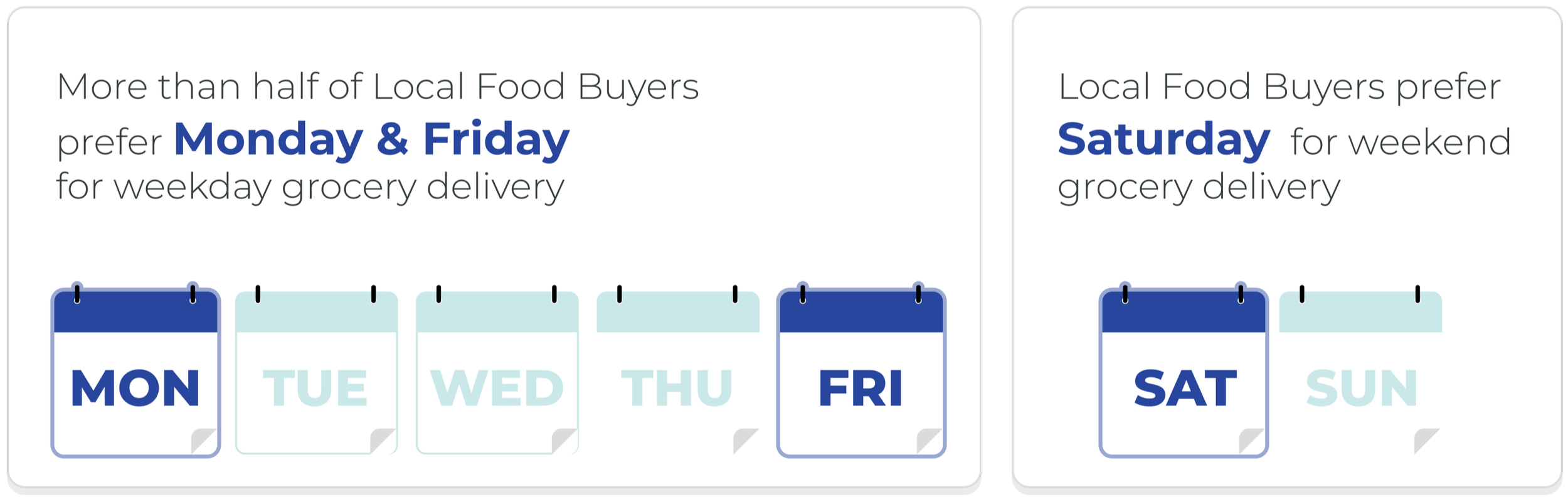
During the week, more than half of Local Food Buyers prefer Monday and Friday for weekday grocery delivery. To reduce cold-storage requirements, Farmers should align their harvest and fulfillment days with preferred Buyer delivery days to increase same-day inventory turnover. Aligning production schedules will also simplify your fulfillment process and reduce your labor costs, while ensuring Buyers receive the freshest product.
On weekends, survey data indicates that Local Food Buyers prefer Saturday (versus Sunday) for grocery delivery. This is ideal for working families who are not home during weekdays to receive their Farm items. In either case, your Farm goal should be to accommodate the busy lifestyles of your Buyers, by offering both a weekday and weekend delivery option.
Ideal Times for Delivery
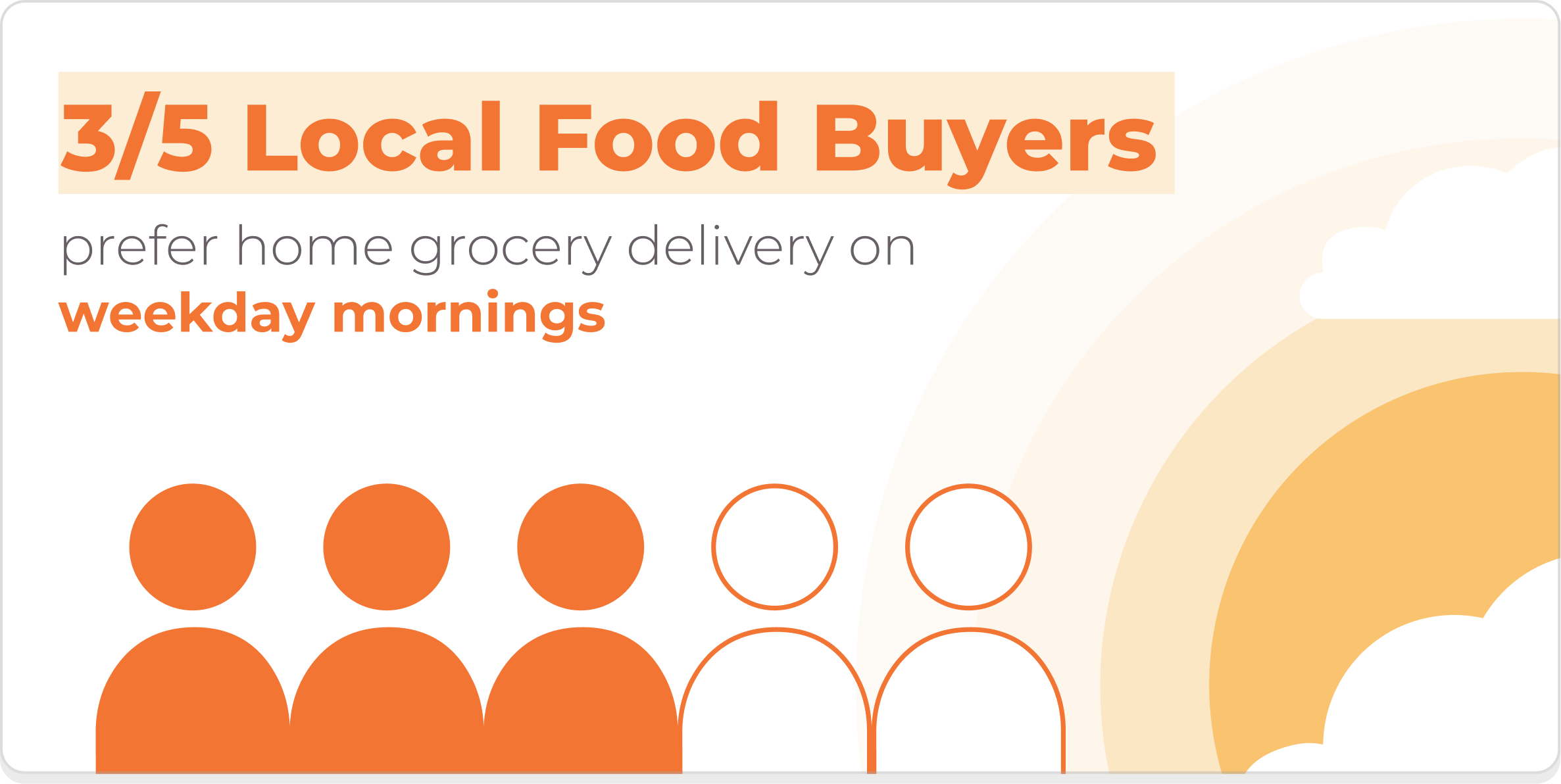
To set your Farm apart from big-box grocery stores, offer more convenient delivery windows based on your Buyers’ preferences. 3 out of 5 Local Food Buyers prefer home grocery delivery on weekday mornings (8:00 am - 12:00 pm). On weekends, Saturday mornings (8:00 am - 12:00 pm) and Sunday afternoons (1:00 pm - 5:00 pm) are preferred. When offering delivery, provide consistent windows so that Buyers can plan their schedules accordingly (e.g., leave a cooler on the porch, have a neighbor move packages). Meeting your Buyers’ expectations with a polished delivery experience will help drive more frequent sales and reduce their anxiety about product spoilage.
Attractive Products for Delivery
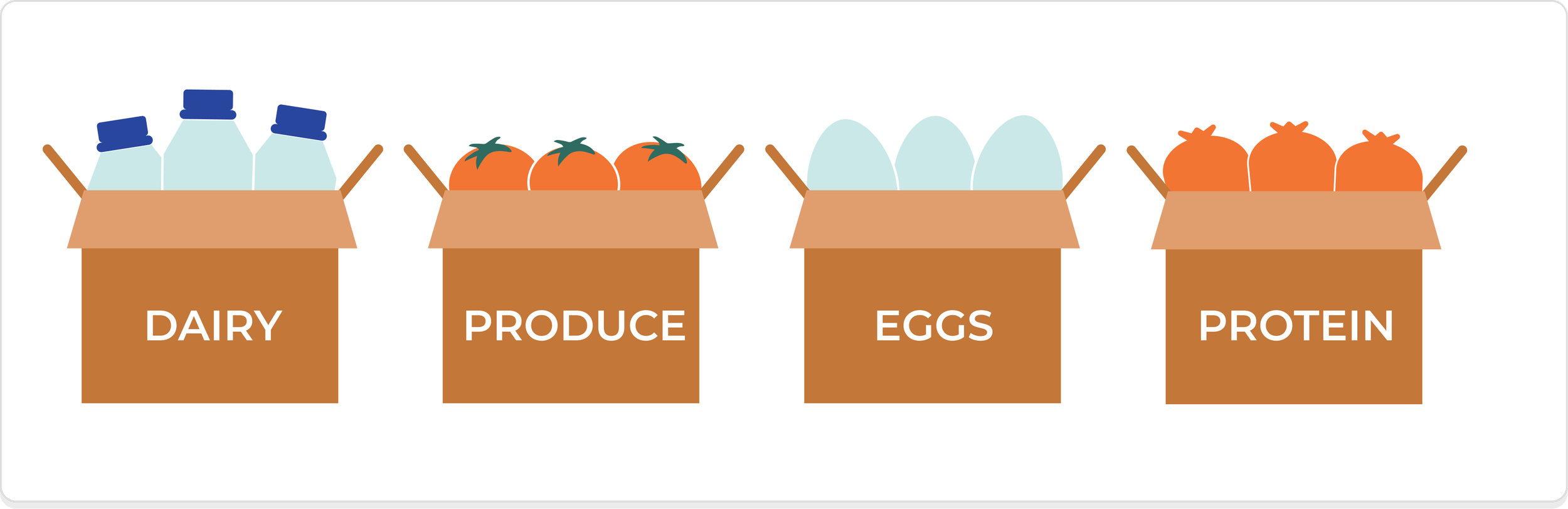
No matter which Farm category you are in, data shows that protein, produce, dairy, and egg products are all considered the most desired products for direct delivery services. Successful Farmers will pair high-demand staple items (e.g., dairy with eggs, or beef with pork and chicken) to increase average order values. By offering a diverse mix of products, your Farm can secure its spot as the primary food source before your Buyers head to a big-box store for alternatives.
The Data Shows:
Protein: 4 out of 5 Local Food Buyers are seeking Protein for delivery.
Produce: 7 out of 8 Local Food Buyers are seeking Produce for delivery.
Dairy: 2 out of 3 Local Food Buyers are seeking Dairy for delivery.
Eggs: 7 out of 10 Local Food Buyers are seeking Eggs for delivery.
Subscription Delivery Demand - “Set and Forget”
The survey data underscored that 3 out of 4 Local Food Buyers are interested in a delivery subscription of staple products. Ongoing subscriptions provide your Farm with recurring cash flow and give Buyers peace of mind that their kitchen will be stocked without having to remember to place regular orders. All your Buyers will continue to eat, so make it easy to receive your Farm products on a regular basis.
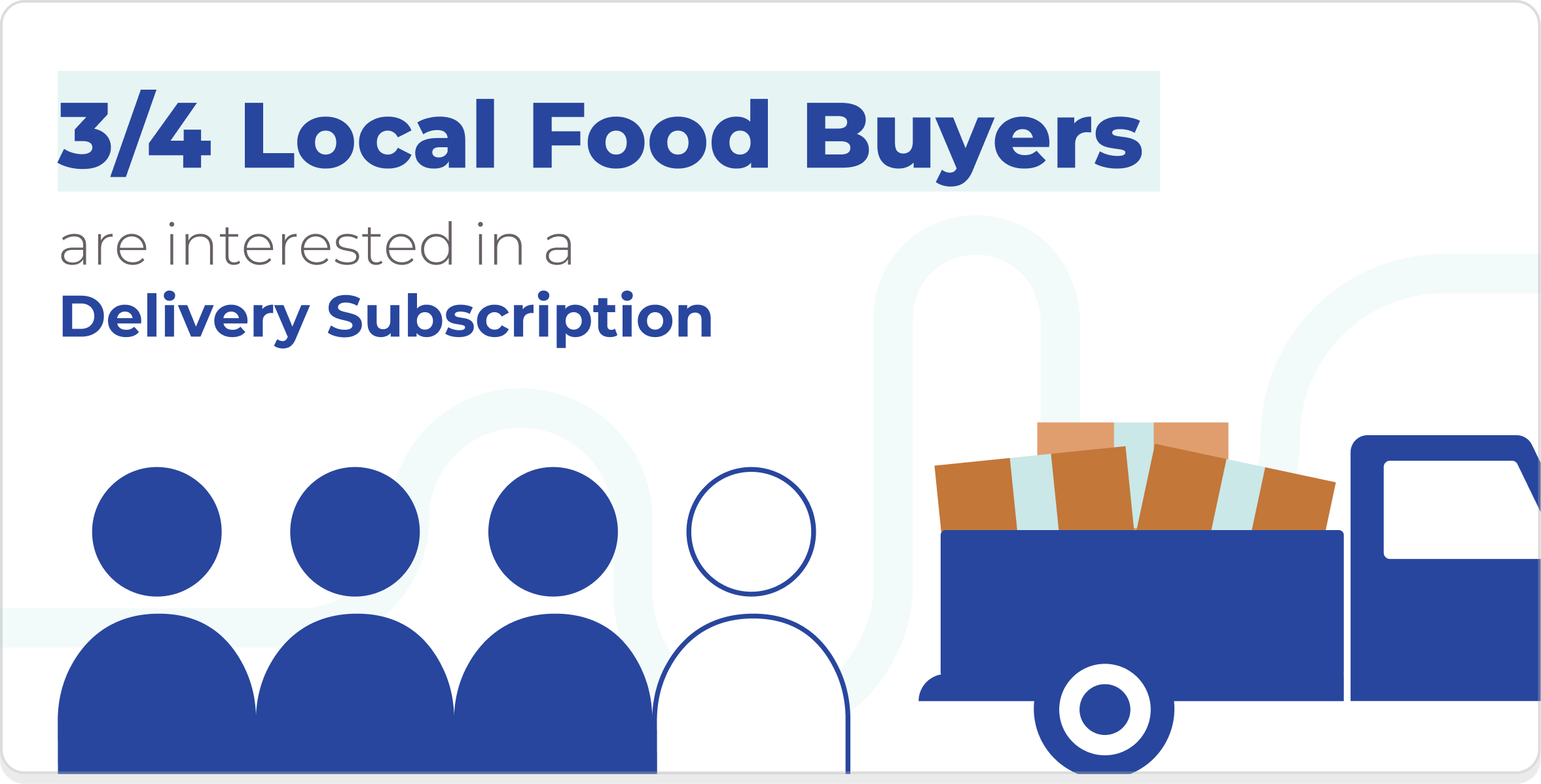
To successfully move all your inventory and increase your Average Order Value (AOV), your Farm should offer subscription bundle boxes. 4 out of 5 people will opt for Farmer-recommended bundles of seasonally fresh products. Be sure to offer small, medium, and large boxes to accommodate households of different sizes. Survey data indicates that 4 out of 5 Local Food Buyers live in households of 2+ people.
Consider Buyer consumption of your Farm products when assembling bundle boxes (for weekly, bi-weekly, or monthly subscription). For instance, the average American eats 10 pounds per month of a given protein (e.g., beef, pork, or chicken), so a Rancher should offer a 10, 20, and 40 pound bundle box of their products on a monthly subscription.
Optimal Delivery Fee
Delivery is not free. Local Food Buyers expect to pay a delivery fee to receive a premium doorstep experience. (Note, Amazon and Instacart both charge a delivery fee for fresh products delivered from a grocery store). In fact, among all Buyers, they are willing to pay an average of $11.47 (or more) for delivery to doorstep. The top 40% of Local Food Buyers are willing to pay $15.11 (or more).
Successful Farmers ensure the base cost of their service charge fully offsets packaging, transportation, and labor costs. Provided your AOV is $50 or more, a delivery fee of $12-$15 is entirely reasonable. To ensure long-term viability, avoid offering ‘free delivery’ to your Buyers, given that macroeconomic factors can significantly impact your total costs. Instead, be transparent with your delivery fees to build a foundation for future Buyer loyalty and growth.
Read: Key Variables that Impact the Cost of Direct Delivery for Your Farm
Direct Delivery to the Doorstep Wins
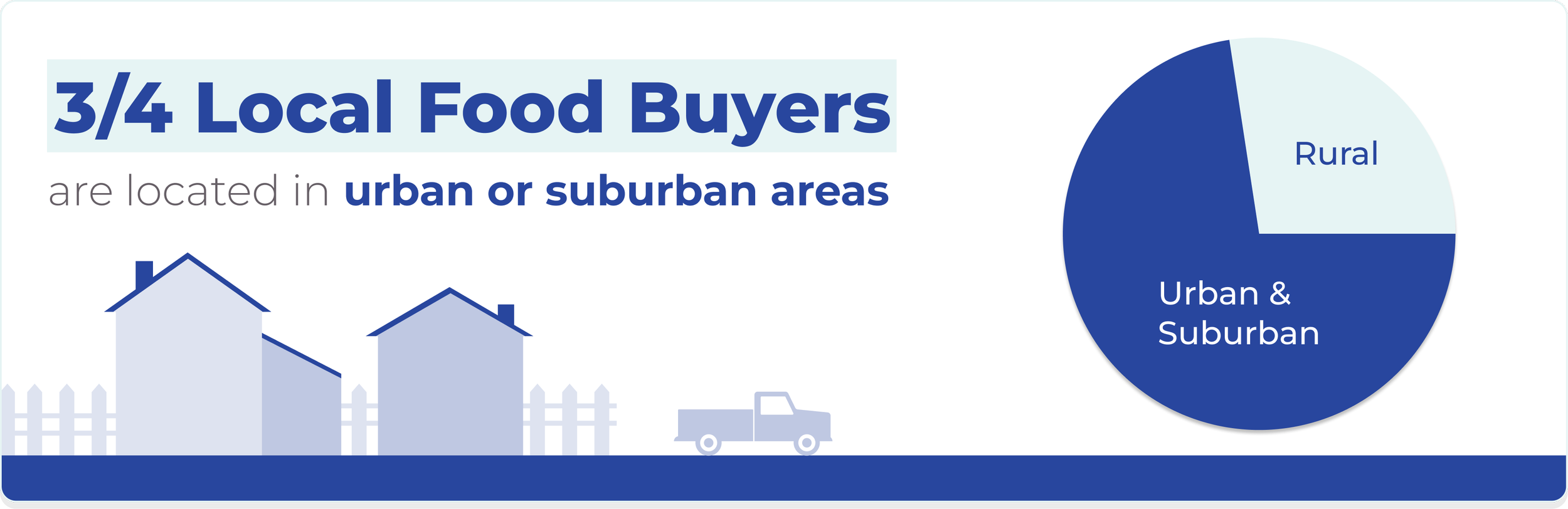
To maximize your Farm profits and scale your direct-to-market business, you have to meet Buyer demand for delivery today. Data shows that 3 out of 4 Local Food Buyers are located in urban or suburban areas, and they expect an ‘Amazon-like’ experience to provide convenient access to local food based on Buyer preferences. By delivering products straight to your customers’ doorstep, you remove fulfillment friction and make ordering from your Farm hassle-free.
Read: Barn2Door Now Offers Delivery-as-a-Service for Farmers
Conclusion
With more than half of all Local Food Buyers receiving deliveries 3+ times weekly, direct delivery isn’t just a Buyer request; it is now a strategic necessity for your Farm business. Delivery will accelerate your Farm success, helping you to win with convenience, delight more Buyers, and make more money.
Barn2Door offers software for Independent Farmers to make more money, ditch the office work and look like a pro. If you’re curious to learn more, watch this 5-minute video.